18 November 2026
HIFU in Perth: what it is and who it suits
Quick answer
HIFU is a non-surgical ultrasound treatment that tightens mild to moderate skin laxity by stimulating collagen production at depths of 1.5–4.5 mm below the surface, with results building over two to three months rather than immediately. It suits people with softened jawlines, loose skin under the chin, and loss of neck tautness, but will not remove deep folds or replace surgical facelift results.
Skin stops being firm gradually. The jawline softens, the skin under the chin loosens, the neck stops looking taut — and none of it happens on a date you could point to. By the time it is obvious in photographs, the change has been building for years.
HIFU is one of the non-surgical options for that stage: focused ultrasound that works below the surface of the skin, where collagen is made. Here is what it actually does, when you see it, and the cases where I would tell you not to bother.
What HIFU is
HIFU stands for High-Intensity Focused Ultrasound. The handpiece sends ultrasound waves through the surface of the skin and concentrates their energy at a set depth underneath it — 1.5 mm in the dermis, 3.0 mm in the fat layer, or 4.5 mm at the SMAS, the supporting layer a surgeon tightens during a facelift.
At each focal point the temperature reaches roughly 60–70 °C. That is enough to make existing collagen fibres contract, which is the slight tightening some people notice within days, and to leave tiny points of controlled heat behind. The surface of the skin is left largely untouched, which is why there is no wound and no recovery time.
What happens over the following weeks
Those heated points start a repair process. Fibroblasts — the cells that produce collagen — build new fibres and rebuild existing ones over the following weeks and months.
This is the part worth understanding before you book, because it sets your expectations properly: HIFU is judged after two to three months, not after the appointment. If you are hoping to walk out looking different, this is the wrong treatment and I would rather say so now.
How much changes depends on your age, the condition of your skin, and how much laxity there was to begin with.
What it helps with
In practice, people come to me about:
- a jawline that has lost its edge
- loose skin under the chin
- a facial contour that looks softer than it used to
- a neck that no longer looks taut
- fine lines that come with slack skin rather than expression
What it will not do
HIFU is not a facelift and I will not sell it as one.
It works on mild to moderate laxity. It will not remove deep folds or excess skin — if that is what is bothering you, no ultrasound device will fix it, and anyone telling you otherwise is selling. The effect is also not permanent, because skin keeps ageing. Some people keep a visible difference for several months or longer.
If I look at your skin at the consultation and think the change would be too small to be worth the money, I will tell you then, not after the treatment.
What the appointment looks like
A consultation with a patch test comes before your first treatment. We go through your skin, your health history and what is realistic, and the test shows how your skin responds.
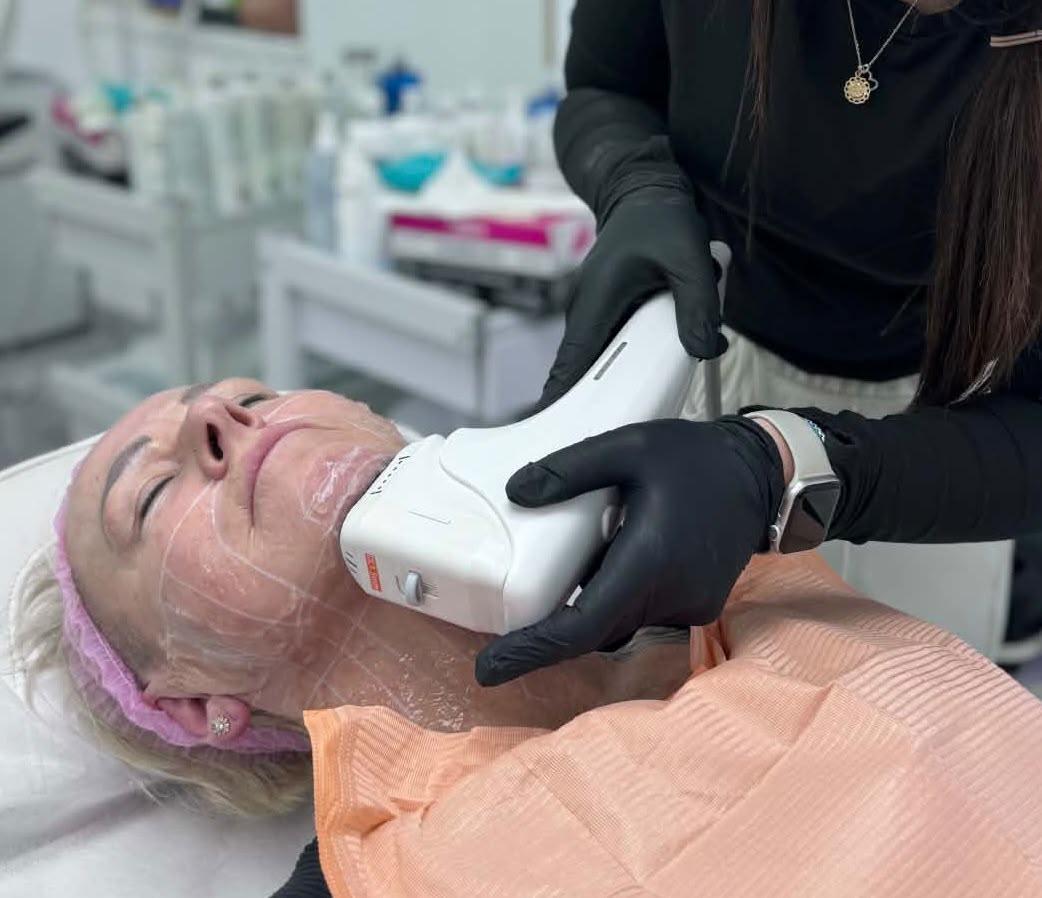
On the day, the area is cleansed and an ultrasound gel is applied so the energy passes cleanly through the surface. Then the handpiece delivers energy at the depths chosen for your skin. Expect warmth, tingling and short moments of discomfort — usually along the jawline and over bone, where there is less tissue in between. Most people manage without anaesthetic.
The face takes about 60 minutes; the face with the neck about 90.
Afterwards you get aftercare advice and go straight back to your day. Mild redness, slight swelling or tenderness may last a short while.
Who it is not for
HIFU is not for everyone. I do not treat during pregnancy or breastfeeding, over an active infection or inflammation in the area, on broken or healing skin, or where there are metal implants.
Tell me at booking if you have an implanted electronic device such as a pacemaker, a condition that affects healing, or if you have had fillers or another aesthetic procedure in the area recently. Some of those mean waiting, others mean no. The final decision is made at the consultation, following the manufacturer's guidance for the device I use.
Is it worth it?
If your skin has lost some firmness and you want to work with it rather than have surgery, HIFU is a reasonable option — provided you accept that the result builds slowly and is not permanent.
If you are expecting the effect of a surgical lift, it is not that, and no amount of sessions will make it that.
The honest way to find out which group you are in is a consultation. I will look at your skin, tell you what I think is realistic, and you decide after that — not before.
Key facts
- HIFU focuses ultrasound energy at three depths: 1.5 mm in the dermis, 3.0 mm in the fat layer, or 4.5 mm at the SMAS layer.
- Temperature at the focal point reaches roughly 60–70 °C, triggering collagen contraction and new fibre production.
- Results are judged after two to three months, not immediately after the appointment.
- A single HIFU session takes approximately 60 minutes for the face, or 90 minutes if the neck is included.
- HIFU is not suitable during pregnancy, breastfeeding, over active infection, on broken skin, or where metal implants are present.
Frequently asked questions
When will I see results from HIFU?
HIFU results build gradually over two to three months as fibroblasts produce new collagen. Some people notice a slight tightening within days, but the main improvement happens later. This is not an immediate treatment—if you expect to look different when you leave the appointment, HIFU is not right for you.
What can HIFU actually treat?
HIFU works on mild to moderate skin laxity: softened jawlines, loose skin under the chin, loss of facial contour firmness, slack necks, and fine lines related to skin slack rather than expression. It will not remove deep folds, excess skin, or dramatically tighten severely sagging skin.
Is HIFU painful and what's the recovery like?
Most people manage without anaesthetic, though you may feel warmth, tingling, and short moments of discomfort, especially along the jawline and over bone. There is no recovery time—mild redness, slight swelling, or tenderness may last briefly. You return to your day immediately afterwards.
How long does HIFU last?
Results are not permanent because skin continues to age. Some people maintain a visible difference for several months or longer. HIFU works with your skin's natural ageing rather than stopping it, making it a temporary improvement rather than a permanent solution.
Who should not have HIFU?
HIFU is not suitable if you are pregnant, breastfeeding, have active infection or inflammation in the treatment area, broken or healing skin, metal implants, pacemakers, healing conditions, or recent fillers or aesthetic procedures nearby. Your aesthetician will advise at consultation following manufacturer guidance.