27 October 2026
Laser tattoo removal cost in Perth
Quick answer
Laser tattoo removal cost in Perth varies by tattoo size, ink colour, depth, and skin type, with most people requiring 6–12 sessions spaced 8–10 weeks apart; an accurate price quote is only given after consultation and patch testing.
How much does laser tattoo removal cost in Perth?
The cost of laser tattoo removal depends on several factors that are specific to your tattoo and your skin. There's no single price because every tattoo is different. Current prices are on the treatments page, but what you'll actually pay depends on the size of the piece, the colours used, how deep the ink sits, and how many sessions your tattoo will need. Darker inks and smaller tattoos typically need fewer sessions and cost less overall. Larger pieces, coloured inks, or tattoos that have been retouched multiple times will require more sessions and represent a higher total investment.
What drives the cost of laser tattoo removal
When you come in for a consultation, we assess your tattoo under close examination. The main cost drivers are:
Size of the tattoo. A small symbol on your wrist costs less per session than a full-back piece. The laser covers ground in passes, so larger areas take longer and may need adjustments to treatment settings.
Ink colour and depth. Black and dark blue inks respond quickly to the picosecond laser. Greens, reds, and yellows need more sessions because the wavelengths work differently on each colour. Tattoos that go deep into the skin or have been layered over time take longer to break down.
Your skin type. We tailor every treatment to your skin, which means the laser settings change from person to person. Darker skin requires different parameters than lighter skin to avoid damage, and this is factored into how the course is planned.
Age of the tattoo. Older tattoos sometimes respond faster because the ink has already begun to break down naturally. Fresh tattoos may need longer between sessions to allow your body to clear the fragmented ink.
Because every tattoo is unique, we don't quote a total price until after the consultation and patch test. This is the only honest way to give you an accurate figure.
How many sessions will you need
Most people need between 6 and 12 sessions, spaced 8 to 10 weeks apart. Some tattoos fade faster, especially if the ink is shallow or monochrome. Heavily pigmented or multi-colour pieces can take longer. Sessions are scheduled only after your skin has fully recovered from the last one, which is why the timeline stretches across many months.
This isn't a quick fix. It's a process that requires patience and commitment. If you're expecting your tattoo to vanish in two or three appointments, you'll be disappointed. But if you're willing to invest the time, the results are permanent.
What happens during a session
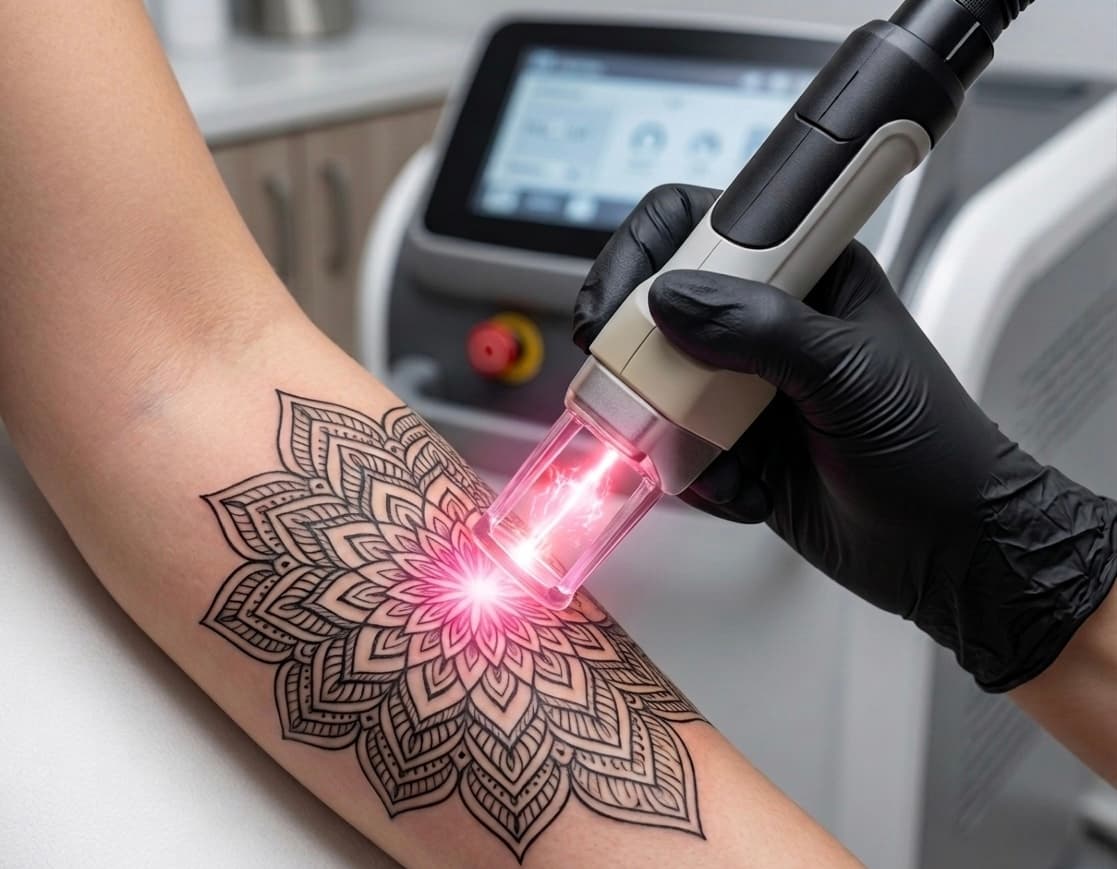
Each session begins with a consultation specific to that appointment. We examine how your skin responded to the last treatment and adjust the laser settings if needed. The picosecond laser delivers energy in extremely short bursts, fracturing the ink into tiny particles that your body then clears naturally through the lymphatic system.
You'll feel a series of quick, sharp sensations. Many people describe it like a rubber band snapping against the skin. Numbing cream can help, and we work at a pace that's comfortable for you. There's no rushing here.
After treatment, the area will be red and may swell slightly for a few hours. Blistering is normal and actually a sign the treatment is working. Avoid sun exposure, swimming, and intense exercise for at least a week. Keep the area clean and moisturized.
Why consultation and patch testing matter
Before we treat your full tattoo, we do a patch test on a small, hidden section. This shows us how your specific skin responds to the picosecond laser and lets us confirm the right settings for your course. It also gives you a realistic sense of the sensation and the healing process.
Skipping this step is how people end up with unexpected outcomes. We don't skip it.
Is laser tattoo removal right for you
If you regret your tattoo and have the time and patience for multiple sessions over several months, laser removal works. If you're hoping for a quick, painless, one-visit solution, this isn't it. If you have very dark skin and haven't found a clinic experienced in treating it safely, that matters—bring that concern to your consultation.
The investment in time and money is real. But so is the result. When your tattoo is finally gone, it's gone for good.
Get in touch to book a consultation. We'll assess your tattoo, answer your specific questions, and give you an honest timeline and cost estimate based on what we see.
https://www.patrycjamikolajczykbeauty.com/en/booking
Key facts
- Most people need between 6 and 12 sessions, spaced 8 to 10 weeks apart, stretching the timeline across many months.
- Black and dark blue inks respond quickly to the picosecond laser, whilst greens, reds, and yellows require more sessions because different wavelengths work differently on each colour.
- Larger tattoo pieces, multi-colour designs, and heavily retouched tattoos require more sessions and represent a higher total investment than small, monochrome pieces.
- Older tattoos sometimes respond faster because the ink has already begun to break down naturally, whilst fresh tattoos may need longer between sessions.
- A patch test on a small, hidden section is performed before full treatment to confirm the correct laser settings and show how your specific skin responds.
Frequently asked questions
How much does laser tattoo removal cost?
Costs vary significantly based on tattoo size, ink colour, depth, and skin type. Patrycja Mikolajczyk Beauty doesn't quote a total price until after consultation and patch testing, as every tattoo is unique. Current pricing is available on their treatments page.
How many sessions does tattoo removal take?
Most people need 6–12 sessions spaced 8–10 weeks apart, spanning several months. Dark, monochrome tattoos may fade faster, whilst heavily pigmented or multi-colour pieces take longer. Sessions are only scheduled after your skin fully recovers from the previous treatment.
What colours are hardest to remove?
Black and dark blue inks respond quickly to the picosecond laser. Greens, reds, and yellows require significantly more sessions because different wavelengths work differently on each colour. Layered or deep ink also takes longer to break down.
Does laser tattoo removal hurt?
Most people describe the sensation as a rubber band snapping against the skin—sharp but quick. Numbing cream is available to help, and the clinic works at a pace comfortable for you. Redness, swelling, and blistering are normal and indicate the treatment is working.
Why is a patch test necessary?
A patch test on a hidden section shows how your specific skin responds to the picosecond laser and confirms the correct settings for your course. It also gives you a realistic sense of sensation and healing before committing to full treatment.